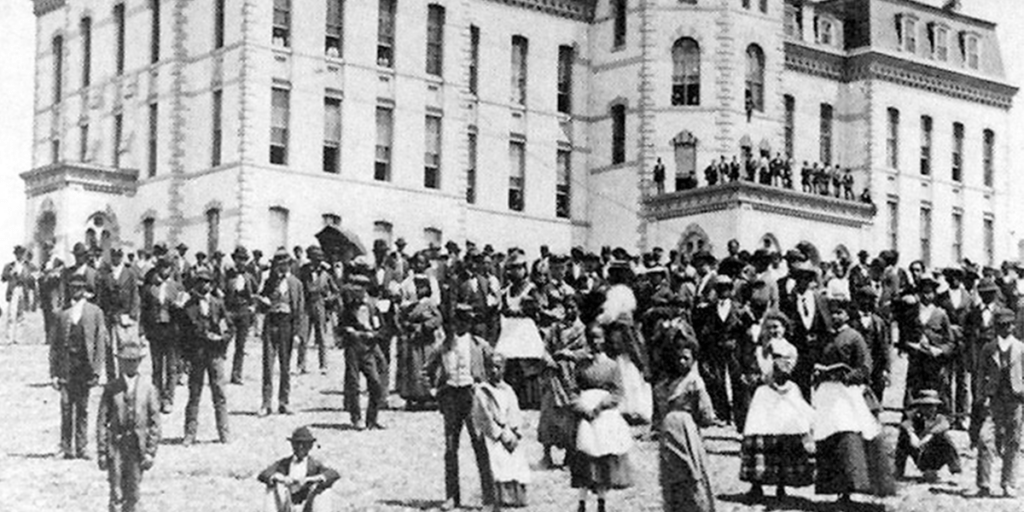
(Above) In 1870, students and others gathered outside Howard University Medical School in Washington D.C., established in 1868. (courtesy photo)
By Dr. Garry “Doc” Ladd
Past Camp Commander Hecker Camp #443
Medical education in the United States has changed significantly since the Civil War era (1861–1865). During the nineteenth century, medical schools lacked standardization and scientific understanding, while modern medical education is highly regulated, research-based, and focused on patient safety. Comparing these two periods highlights the progress made in training physicians.
During the Civil War, medical schools were largely unregulated and varied widely in quality.
Many institutions were privately owned and operated for profit, with minimal admission requirements. Students often did not need a college degree or prior scientific education to enroll (Flexner, 1910). Medical programs usually lasted two years, and students attended the same lectures each year. Clinical experience was limited, and many graduates had never treated a patient before practicing medicine (Bollet, 2002).
In contrast, medical school today is highly standardized and competitive. Students must complete a four-year undergraduate degree, fulfill science prerequisites and succeed on a medical school entrance exam before admission.
Medical school now lasts four years and is followed by several years of supervised residency training. Students receive extensive hands-on clinical experience in hospitals and clinics, ensuring they are prepared to provide safe and effective care (Association of American Medical Colleges [AAMC], 2023).
Medical knowledge during the Civil War was also limited. Germ theory was not widely accepted, and doctors did not understand how infections spread. As a result, sanitation was poor, and diseases such as infection and dysentery killed more soldiers than combat injuries (McPherson, 1988).
Common treatments included bloodletting, mercury-based medicines and amputations performed without sterile techniques or advanced anesthesia (Bollet, 2002).
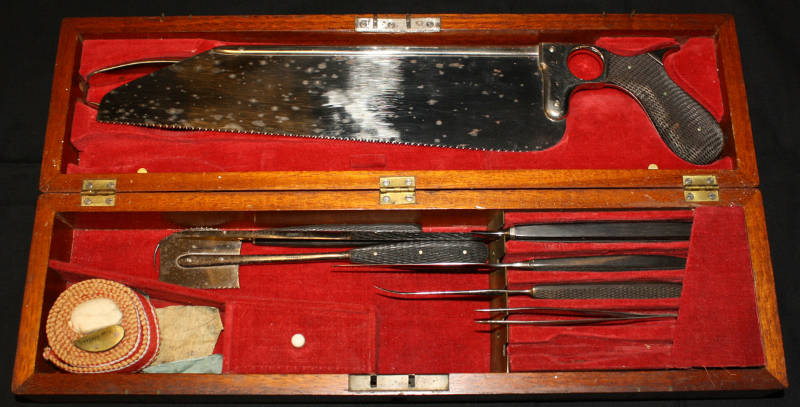
An amputation kit from the Civil War period. (National Archives)
Modern medical education is based on scientific research and evidence-based practice. Students study subjects such as microbiology, genetics, pharmacology and pathology.
Advances in anesthesia, antibiotics, infection control and medical technology have greatly improved patient outcomes. Ethics, communication skills, and teamwork are also emphasized in medical training today (AAMC, 2023).
In conclusion, medical schools during the Civil War were short, inconsistent and based on limited scientific knowledge.
Today’s medical schools are rigorous, standardized and grounded in modern science. These improvements have greatly enhanced the quality of medical education and patient care.
______________________________________________________________________
Resources:
-Association of American Medical Colleges. (2023). Becoming a doctor. https://www.aamc.org
-Bollet, A. J. (2002). Civil War medicine: Challenges and triumphs. Galen Press.
-Flexner, A. (1910). Medical education in the United States and Canada. Carnegie Foundation for the Advancement of Teaching.
-McPherson, J. M. (1988). Battle cry of freedom: The Civil War era. Oxford University Press.
-OpenAI. (2024). ChatGPT (GPT-5.2) [Large language model]. https://chat.openai.com.
 heckercamp443
Leave a comment