By Gerald Sonnenberg
Hecker Camp #443 Secretary
Dept. of Illinois Patriotic Instructor, editor
The Civil War was nearly a year old when Union victories occurred during the Civil War battles of Forts Henry and Donelson 164 years ago. These victories were significant for several reasons and helped make Illinois’ military contribution to the war effort stand out.
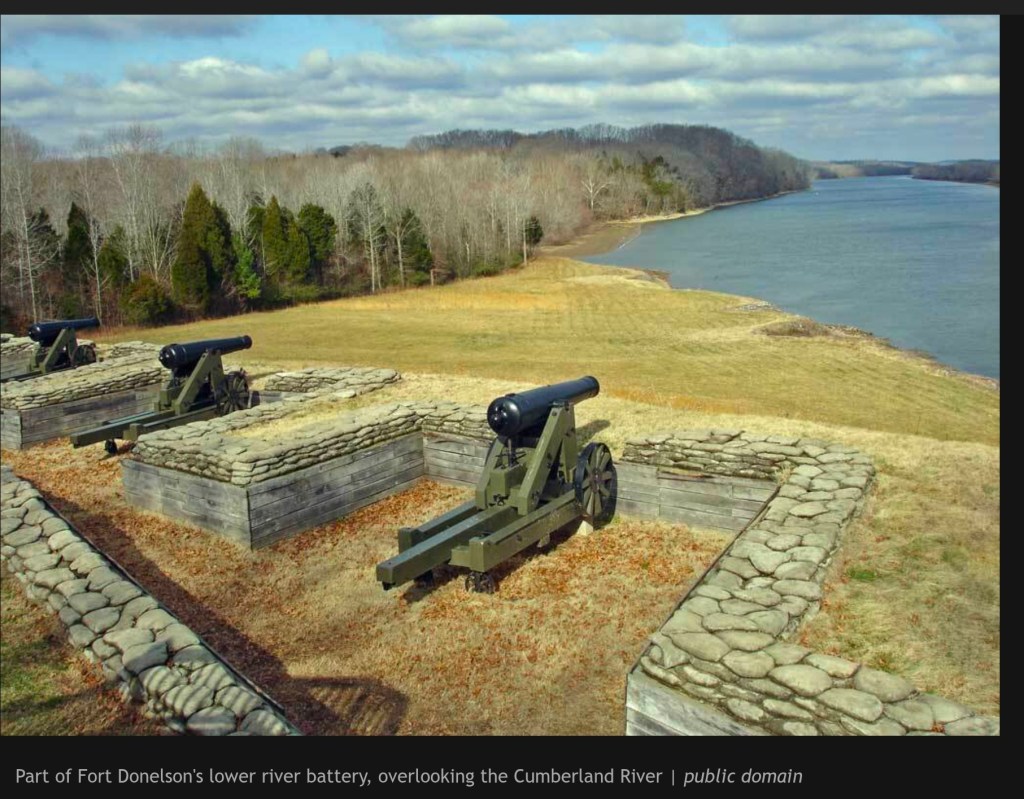
Strategically, Fort Henry sat on the Tennessee River just below the Kentucky-Tennessee border, while Fort Donelson sat on the Cumberland River below the same border. The two forts blocked the U.S. army from penetrating into the heart of the South through central Tennessee and northern Alabama. Taking control of the forts would be a major accomplishment for Union forces, and General U.S. Grant recognized the situation as a great opportunity to damage the Confederacy.
When Fort Henry fell Feb. 6, 1862, it marked the Union’s first major victory and allowed Grant to advance into Tennessee and control key waterways.
Fort Donelson’s surrender Feb. 16 forced the Confederacy to evacuate Nashville and Columbus, Kentucky and led to the opening of Tennessee to Union advances. These victories not only bolstered Union morale, they also established Grant as a key figure in the war.
In a fundamental way for Illinois, these victories signaled the beginning of the state’s real military impact on the war.
Union armies at the time were primarily named after rivers to reflect their operational bases and the geography of the region. Had they chosen to name armies after the state most represented in them, this particular army could have been named the Army of Illinois.
The 24,000-man army Grant commanded would later be named the Army of the Tennessee after the river. However, it had 56 units; thirty-two of which were from Illinois. After these victories, Illinois residents of the time would have taken pride knowing units from their state took part. They certainly had a chance to read about them.
In an article in Belleville, Illinois’ Semi-Weekly Advocate newspaper dated Friday, Feb. 21, 1862, it listed in detail several Illinois regiments and their disposition during the fight for Fort Donelson, noting, “Charging under a hot fire up the steep hill on which was the outer redoubt, our troops gained the high breastworks and with hardly a pause went over them, planting the Stars and Stripes over the walls in most perfect order, under a most galling fire.”
The units highlighted were the 11th, 20th, 17th, 48th, 29th, 18th, 8th and 30th Illinois regiments.
From the Feb. 18, 1862 Chicago Times regarding the same battle, “A formidable attempt was made last night to take Taylor’s battery by the enemy, who approached under cover of darkness, but they were gallantly repulsed by the 20th Illinois.”
Officially, 256,297 men from Illinois served in the Union Army during the war making it the fourth largest contributor of troops behind New York, Pennsylvania and Ohio. Illinois had a population of 1.6 million in 1860. That means approximately 16% of the state’s population served in the Union Army. There would have been men from other states who served in Illinois regiments, just as my grandfather and uncles, who hailed from western Pennsylvania, served in Ohio regiments. This might account for several thousand men, but this does not take away from Illinois’ impact on the war effort.
In the end, 150 infantry regiments, 17 cavalry regiments and two light artillery regiments were mustered. Illinois also suffered significant casualties during the war with approximately 31,000 military dead. This includes both combat-related deaths and those who died of disease. In addition, Illinois supplied many of the Union Army’s top officers with a total of 177 Illinois generals serving at some time during the conflict.
Illinoisans can take pride in their service and sacrifice to help save this nation as their contribution in men and resources was significant.


Leave a Reply