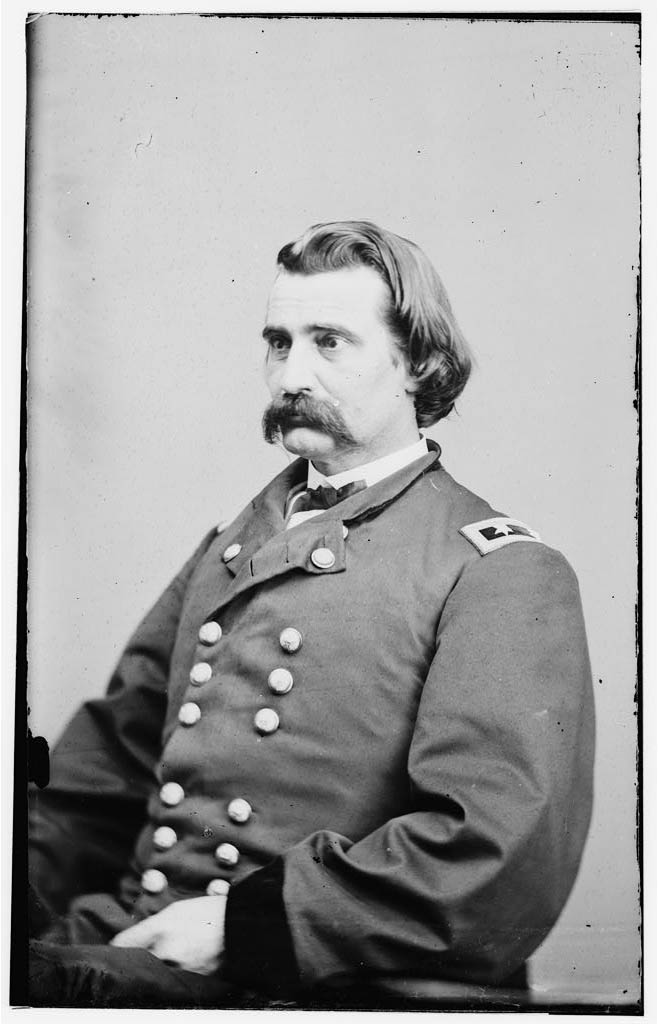
(Above) An image of Maj. Gen. John A. Logan. (Courtesy image)
By Gerald Sonnenberg
Hecker Camp secretary, editor
Memorial Day was first widely observed on May 30, 1868 to commemorate the sacrifices of Civil War soldiers, by proclamation of Maj. Gen. John A. Logan of the Grand Army of the Republic, an organization of former Union sailors and soldiers. As the third Commander-in-Chief of the Grand Army of the Republic Veterans organization at that time, Logan issued General Order No. 11.
The first paragraph reads, “The 30th day of May 1868 is designated for the purpose of strewing with flowers or otherwise decorating the graves of comrades who died in defense of their country during the late rebellion, and whose bodies now lie in almost every city, village and hamlet churchyard in the land. In this observance no form or ceremony is prescribed, but posts and comrades will, in their own way, arrange such fitting services and testimonials of respect as circumstances may permit.”
Logan, a Murphysboro, Illinois native, was a former Union Army general; served the state of Illinois as a state representative, a congressman and a U.S. senator. He was also an unsuccessful candidate for vice president of the United States in 1884. During that first national commemoration, former Union General, sitting Ohio Congressman and future President James Garfield made a speech at Arlington National Cemetery, after which 5,000 participants helped to decorate the graves of the more than 20,000 Union and Confederate soldiers who were buried there.
This national event helped galvanize efforts to honor and remember fallen soldiers that began with local observances at burial grounds in several towns throughout the United States following the end of the Civil War. One of the first such events was the May 1, 1865 gathering in Charleston, South Carolina organized by freed slaves to pay tribute and give proper burial to Union troops.
According to PBS.org, New York was the first state to designate Memorial Day as a legal holiday in 1873. By the late 1800s, many more cities and communities observed Memorial Day, and several states had declared it a legal holiday.
After World War I, it became an occasion for honoring those who died in all of America’s wars and was then more widely established as a national holiday throughout the United States. In 1971, Congress passed the Uniform Monday Holiday Act and established that Memorial Day was to be commemorated on the last Monday of May. The holiday has come a long way in growth and formality from its beginnings as decoration day, but hopefully with a much greater appreciation for the service and sacrifice of millions of Americans.


Leave a Reply