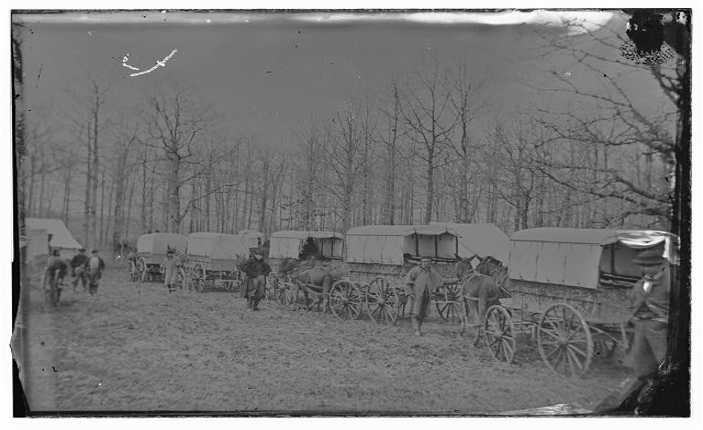
(Above) Ambulances at Harewood Hospital, Washington, D.C., 1863. (Photo courtesy of U.S. Library of Congress)
By Dr. Garry “Doc” Ladd
Hecker Camp Past Camp Commander
Jonathan Letterman was one of the most important medical figures of the American Civil War because he transformed battlefield medicine and greatly improved the survival of wounded soldiers. He did this by improving battlefield casualty evacuation.
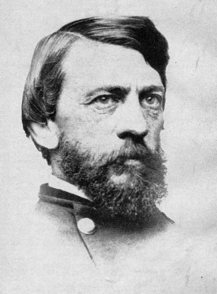
Dr. Jonathan Letterman. (Photo courtesy of U.S. Army Medical Museum).
Born in 1824 in Canonsburg, Pennsylvania, Dr. Letterman graduated from Jefferson Medical College and joined the U.S. Army as a surgeon. Before the Civil War, he gained experience while treating soldiers on the western frontier, where he learned the importance of organization and quick medical care. These experiences prepared him for the challenges he would later face during the Civil War.
In 1862, Gen. George B. McClellan appointed Letterman as medical director of the Army of the Potomac. At the time, battlefield medical care was disorganized and inefficient. Wounded soldiers were often left on the battlefield for days without treatment, and there was no reliable system for transportation or medical supply distribution. Letterman recognized these problems and developed a new system that revolutionized military medicine.
Ambulance Corps
One of Letterman’s greatest contributions was the creation of an organized ambulance corps under the direction of the Medical Corps. Prior to this, ambulances were poorly managed and often used for purposes unrelated to medical care and under the direction of the quartermaster. Letterman trained dedicated stretcher bearers and ambulance drivers whose only responsibility was to transport wounded soldiers quickly and safely.
He also established field dressing stations, mobile field hospitals and larger general hospitals farther from the battlefield. This system allowed injured soldiers to receive treatment much faster than before. A concept still followed today.
Letterman’s medical system proved highly successful during major battles like Antietam, Fredericksburg and Gettysburg. At Gettysburg in 1863, thousands of wounded soldiers were treated efficiently because of the procedures he developed. His methods reduced suffering, improved survival rates and demonstrated the importance of organized emergency medical care.
The influence of Dr. Jonathan Letterman extended far beyond the Civil War. His ideas became the foundation for modern battlefield medicine and emergency medical services used today. Ambulance systems, triage procedures and organized trauma care all reflect principles that Letterman introduced during the war. Because of these achievements, he is often called the “Father of Battlefield Medicine.”
Dr. Letterman’s innovations saved countless lives and changed military medicine forever. His leadership, organization and dedication to caring for wounded soldiers left a lasting impact on both military and civilian medical practices in the United States.
Sources:
*Medical Recollections of the Army of the Potomac. New York: D. Appleton and Company, 1866. https://achh.army.mil/history/book-civil-lettermanmemoirs-medical-recollections
*Carter, J., & Meyers, N. (2026). The Life and Legacy of Dr. Jonathan Letterman (1824-1872): The Father of Modern Battlefield Medicine. Cureus, 18(2), e102779. https://doi.org/10.7759/cureus.102779
*National Park Service. (n.d.). Jonathan Letterman and Civil War Medicine. https://www.nps.gov/articles/000/jonathan-letterman.htm
*OpenAI. “ChatGPT.” AI language model, 2026. https://openai.com/?utm_source=chatgpt.com
 heckercamp443
Leave a comment